


What happens to our drive when we stop looking to the next achievement for fulfillment?
In our latest AMA, Cortland Dahl explores topics such as how to widen awareness when the mind feels contracted, why the motivation behind a practice matters, and how compassion can become the energy behind an engaged, creative life. Kim brought your questions, and Cort joined us for the hour while Richie was traveling.
What’s inside
Three ways to widen the aperture of awareness: the body, the breath, and the mind
Shamatha and loving-kindness: why the same technique can serve different purposes
Meditation, autism, and ADHD: promising research, unanswered questions, and strengths worth recognizing
Career ambition and the shift to a different source of motivation
What we know—and still don’t know—about consciousness
A 2-minute guided practice led by Cort
Practicing with death, impermanence, and the moments before sleep
The full hour mapped below, plus the flashcards and the recording for paid members.
Companion Flashcards At Bottom
You don’t have to turn ambition off
An anonymous listener asked how to balance “the false promise of desire” with career ambition. If Buddhism teaches being, are we supposed to stop progressing and find contentment in the job we already have?
Cort looked to the people who have gone deepest into the practice of being. The teachers he knows are productive, creative, and engaged. Learning to be has not left them sitting on the couch.
We are not losing the energy and drive in our life. What we’re doing is we’re changing the energy source.
—Cortland Dahl
He described the familiar mixture that powers a career: some care and purpose, some competition, some hope that success or status will finally make us feel fulfilled. Practice can change that mixture. We still need to make a living, and we can still want to accomplish things. But caring for our family, our community, and the wider world can become the driving force.
There can be an awkward stretch in between. The old motivation has weakened before the new one feels fully available.
It’s almost as though they’ve unplugged from the old energy source, but they’re just beginning to find the light socket for the new one.
—Cortland Dahl
Cort suggested learning about people who have navigated that transition. Their lives can help us recognize what a different motivation looks like in action. The energy may carry us further along our current path, or it may lead somewhere else.
The moment before you start meditating
Mary Beth asked what we are actually doing when we “widen the aperture,” and whether there are different ways to practice it.
Cort offered three entry points. With the eyes, let attention include the edges of the visual field. With the breath, notice the release that comes with an exhale. With the mind, sit as though you are about to meditate, but haven’t started yet.
You are a little more alert because you are getting ready. But you haven’t begun following the breath or running a technique. See whether you can remain in that small space of wakeful presence.
So if that feels like nothing’s happening, that’s perfect.
—Cortland Dahl
Even the thought “Am I doing it?” can show up. The invitation is to become familiar with being, without turning it into another task to perform correctly.
Cort recommended short doses: five or ten seconds, then return to whatever you were doing. These little moments can happen during meditation or in the middle of the day. With repetition, the opening becomes more familiar.
2-MINUTE PRACTICE LED BY CORT
In the recording, 01:25–03:04
2-minute practice: Wherever you are, if you’re sitting still, let your eyes close or remain gently open. Take a few slow, deep breaths and feel the breath moving in and out of your body. Allow the mind and body to settle. Then bring a little kindness and compassion into the moment. In words or images that resonate with you, form an intention that whatever good comes from this time might ripple outward—benefiting your own life, the people around you, and the wider world. Rest with that motivation for a few breaths.
The full hour, mapped
Read the gist below, then drop into the recording at any timestamp.
01:25 — Begin with a compassionate motivation. Cort leads the opening micro-practice: settle with the breath, then imagine the good from this time rippling outward. He uses this pause before meetings and other activities throughout the day.
03:49 — Three ways to widen the aperture. Mary Beth’s question opens a practical exploration of expansive awareness. Cort offers entry points through peripheral vision, the release of an exhale, and the shift from doing to being.
09:15 — Before the doing starts. Imagine you are about to meditate, but haven’t begun. Notice the alertness already there. Nothing special needs to happen; try a few seconds, then return to your day.
12:07 — Shamatha and loving-kindness. Maya asks whether these practices cultivate different capacities. Cort explains how loving-kindness can support absorptive concentration in some traditions, while others emphasize bringing kindness into everyday life. The motivation and purpose matter alongside the technique.
19:08 — Meditation, autism, and ADHD. Brenda asks about different neurotypes and long-term practitioners. Cort describes the research as promising but preliminary, with short training periods and limited longer-term evidence.
21:06 — Compared with what? Why a waitlist and an active comparison group answer different research questions. Cort explains why an intervention’s failure to outperform another treatment should not automatically be read as “nothing happened.”
25:28 — Strengths deserve attention, too. Cort asks what research might discover by examining how practice supports neurodivergent strengths. After a listener flags his earlier language, he acknowledges the correction and returns to the strengths-focused spirit of his answer.
27:46 — Awareness, connection, insight, and purpose. Rachel asks how these capacities relate to nervous system practices. Cort suggests thinking of them as possible ingredients across approaches, while emphasizing that he would need to know the specific method to say more.
30:38 — Career ambition and a different energy source. Can we practice contentment and still want to progress? Cort explores the shift from pursuing fulfillment through success to working from compassion, care, and purpose—and the uncertain transition between them.
37:24 — Does explaining the brain explain the mind? Dave’s question, prompted by Douglas Hofstadter’s I Am a Strange Loop, leads into competing views of mind and matter. Cort argues for humility and openness about unresolved questions of consciousness.
44:28 — How shall I live, knowing I will die? Gwen asks about daily practice with mortality. Cort pairs appreciation for the opportunity of being alive with the recognition that we do not know how long it will last. “Today is the day to be kind.”
49:42 — The in-between states. Cort introduces the Tibetan concept of bardos, then describes how observing the transition into sleep and practicing lucid dreaming fit into that tradition’s preparation for death.
55:32 — Can someone near death sense our care? Sherry’s question brings a careful answer: Cort says he does not know scientifically. He distinguishes possible awareness without communication from traditional beliefs and family anecdotes about offering love and reassurance.
59:19 — A community built through questions. Cort closes with gratitude for the dialogue, the people joining each month, and the generosity that makes these gatherings possible.
Upcoming Events:
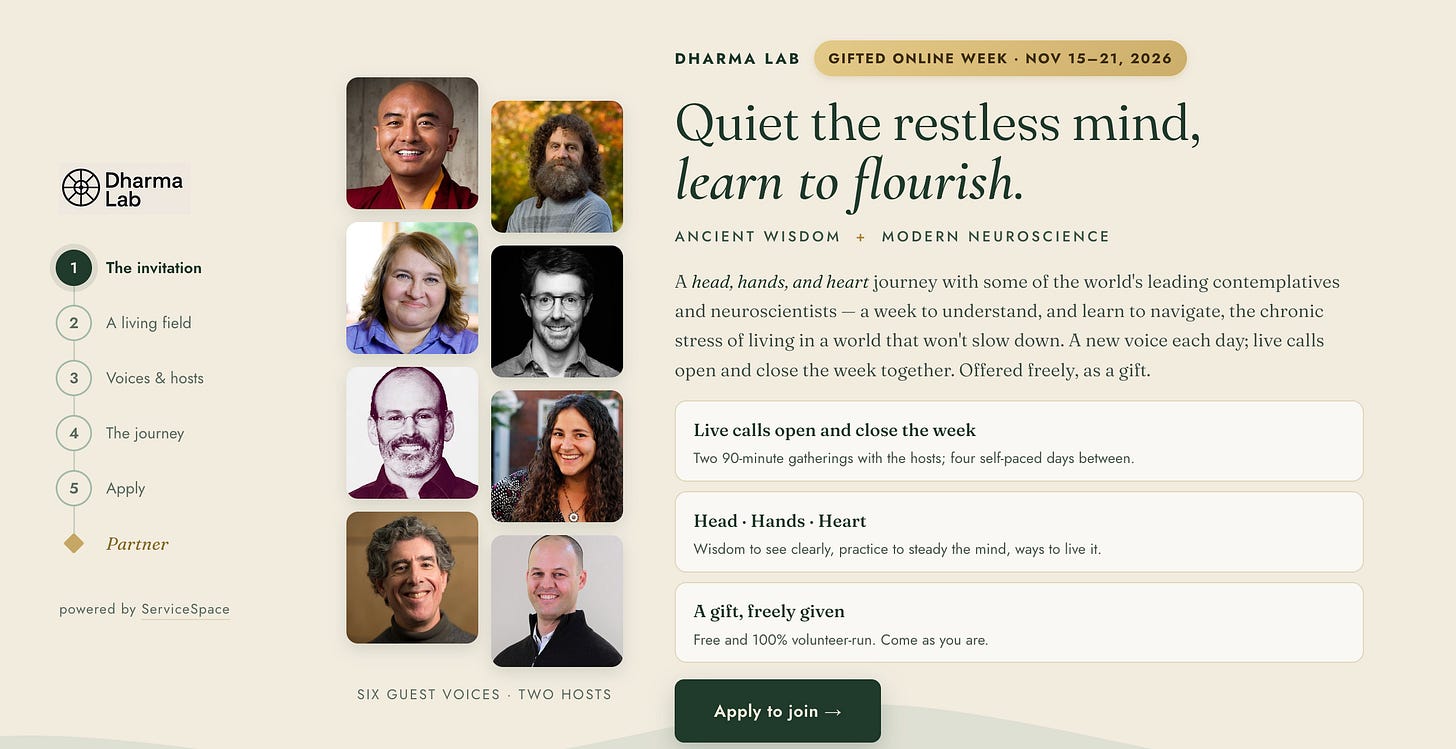
Quiet the Restless Mind — November: A gifted online week from Dharma Lab and ServiceSpace, November 15–21, exploring how to meet everyday stress, distraction, and overwhelm with greater clarity and ease. Bringing together ancient wisdom and modern neuroscience, the week features leading contemplatives and researchers including Robert Sapolsky, Laurie Santos, Mingyur Rinpoche, Judson Brewer, Sharon Salzberg, Martin Picard, Cortland Dahl, and Richard Davidson.

Episode Companion Flashcards:


