


Context for Your Brain + AI
From The Atlantic to The Guardian, X to Instagram, recent headlines warn that AI tools like ChatGPT are making us lazy thinkers, dulling creativity, and eroding memory. But what if the problem isn’t the tool itself—it’s the way we use it?
In our next episode of the podcast Dharma Lab (airing on Wednesday this week), we unpack new research from a group at the MIT Media Lab and a lab in Denmark on how large language models shape thinking and learning. The findings from the studies? Yes, using AI from the start can lower engagement. But with curiosity, intention, and the right prompts, AI can actually deepen reflection, boost retention, and strengthen ownership of your ideas.
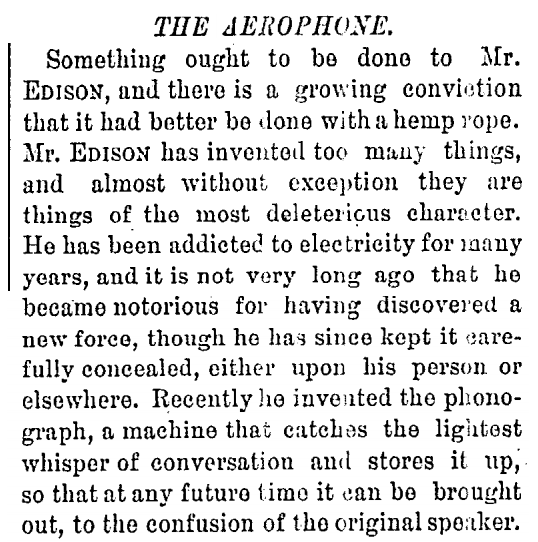
Historically, an easy conclusion to draw from studies of new technology is that the hype often leads to negative conclusions about effects on our brains / well being / prosperity. Studies would have concluded the same thing at the time of invention and discovery of the printing press, the phonograph, electricity, the computer, and the internet. The old paradigm inevitably sees the new one as a threat. Fearful headlines about new technologies have been a recurring theme in history, vividly reflecting the anxiety and trepidation that often accompanies breakthrough innovations.
Clipping below from 1878 NY Times fearful of the phonograph created by Thomas Edison
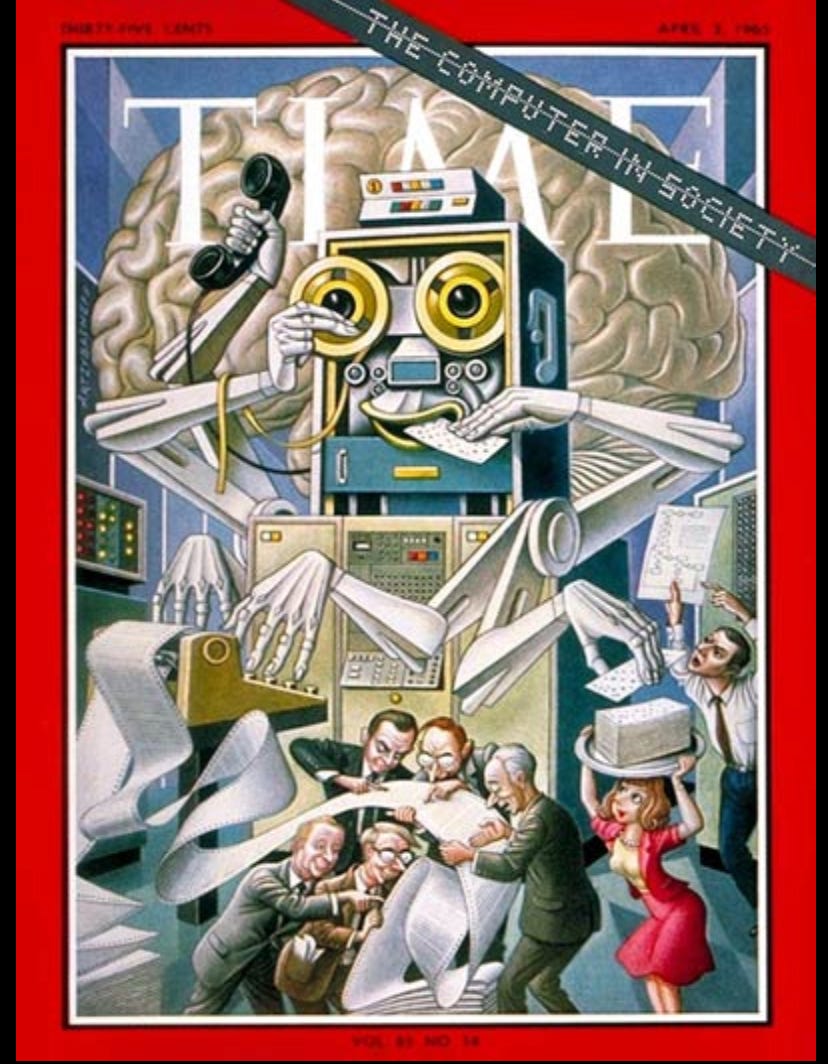
A Time Magazine cover from April 2, 1965 illustrating fear of the rise of the computer
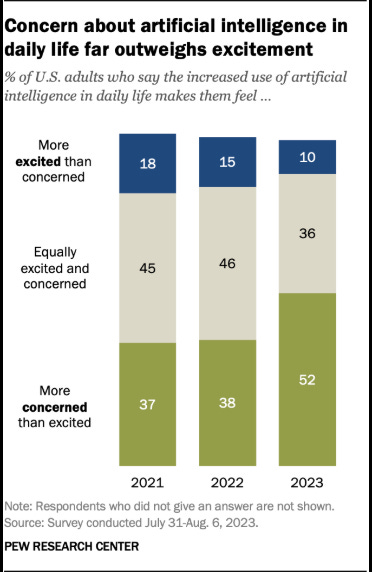
…And today >50% of Americans, an increasing number, are more concerned than excited about AI
Rather than asking “Is AI ruining our brains?”, we explore the more transformative question: How are we engaging with new technologies and can we use these new technologies in ways that enhance our well-being?
In our upcoming podcast, we break down the study from MIT to set baseline context. Over the course of this week we will lay out our point of view - that many of these studies are quick to assume that AI is bad, but more nuance and adjustment is required for how we use it and engage with it.
Highlights from a new MIT Media Lab study "Your Brain on ChatGPT" (2025)
The setup: Participants (ages 18–30s) were asked to write essays on thoughtful topics—like loyalty and happiness—across three sessions. They were randomly assigned to one of three groups:
Brain Only – no technological support.
Search Only – allowed to use a search engine (with AI disabled).
LLM Group – used ChatGPT to assist with their writing.
Data collected: Researchers recorded participants’ brain activity using EEG, analyzed their language, and later tested their memory of their own essays.
Key findings:
Brain-only group showed the strongest neural connectivity—their brains were more actively engaged.
The LLM group showed the lowest engagement and reported the least ownership over their essays.
Switching matters: Participants who used only their brains first, then switched to ChatGPT, showed better engagement than those who used AI from the start.
Denmark Study
A recent study from a group in Denmark supports the finding that bringing self-awareness to the use of AI leads to better learning by users. In that study, researchers added prompts for self-reflection and emotional intelligence to the AI experience for high schoolers. The result? Students who used ChatGPT with these meta-cognition prompts outperformed those using ChatGPT alone. They remembered more, reflected more, and felt more ownership.
Dharma Lab’s Take
Maybe it’s not about whether LLMs are good or bad, but about how they are used and the meta-cognitive context in which they are embedded. In a world where memory is outsourced to Google, maybe critical thinking, clarity, and communication become even more essential. Intention plays a huge role—what mindset we bring to AI use matters just as much as the tool itself.
Rather than asking “Is AI ruining our brains?”, the deeper question becomes:
“How are we engaging with AI?”
It’s our relationship to these tools that shapes our mental development. With intention, curiosity, and reflection, AI can become a partner—not a replacement—for our minds.
A few practical insights:
Curiosity is key. Be interested not just in what you’re doing with AI, but in what it’s doing to you.
Intentionality matters. Pause before using AI—why are you using it? Can you find an altruistic intent that underlies your engagement?
Reflect as you go. Self-awareness can be supported by AI, especially when guided by the right prompts.
Don’t outsource your identity. Use AI to assist your thinking—not to replace your ownership of ideas.
Be the Driver. AI tools often feel like the most supportive (and overly enthusiastic) friends—“That idea has breathtaking clarity!”—which, while flattering, can become subtly addictive. The key is to stay in the driver’s seat. Know what AI is designed to do—and don’t let it define who you are or how you think.
We want to hear from you. What are your experiences while using AI? What do you think of the MIT findings? Have the AI products and technology helped you? Do you notice a change in your mental state when using the technology?
Tune in Wednesday on the Dharma Lab Podcast when we discuss in detail the studies and the take-aways.
I’m using ChatGPT a lot and it has helped me immensely to digest complex dharma concepts. The key for me was to keep my practice as instructed by my guru, to take the ChatGPT answers as an opportunity to reflect from different angles but not as definite truth and to engage and challenge its answers with my reflections and additional prompts. The moment I asked it to not flatter me it stopped. So, it is really very helpful if the user is aware what it is and how to use it.
I notice that if I use it in a lazy way, asking stuff without much effort (e.g. low effort prompt), I am usually disappointed with the answer. So in a way the system incentivices good prompts with intention in order to perform the best, making me more satisfied with it's answer.
Nowadays I use it daily, in many ways to understand Dharma in my life. I see it as a teacher in many ways. Not only for Dharma but also for topics like neuroscience, psychology and asking questions like: what happens in the brain when I meditate, neurologically. That's how I first encountered the default mode network, so I could understand what I experienced from multiple perspectives in different languages.