


A large international study asked a simple question: can a few minutes of intentional practice each day measurably improve well-being?
That was the premise of the Big Joy Project, a citizen-science experiment led by our dear friend, the brilliant scientist Dr. Elissa Epel and her team at UCSF. Together with colleagues around the world, they invited people to try one tiny act of joy every day for a week. Over 17,000 people, from 169 countries, initially signed up. They weren’t monks on retreat or wellness influencers. They were everyday people, juggling families, jobs, stress, and uncertainty.
The results were striking.
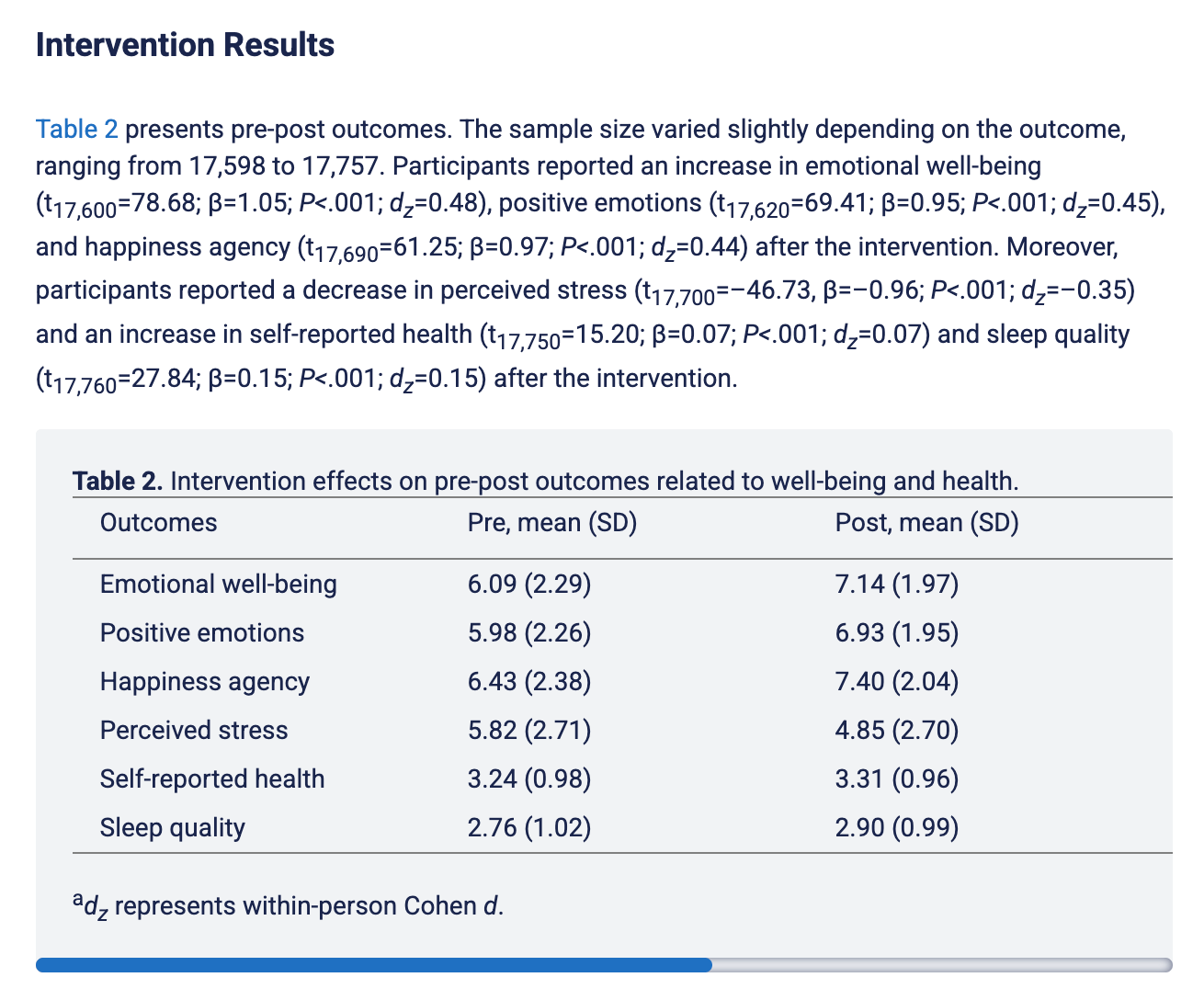
After just seven days of micro-practices such as: writing a gratitude list, celebrating someone else’s joy, or pausing to watch something awe-inspiring; participants reported higher well-being, more positive emotions, greater agency over their happiness, and significantly less stress. They even slept better.
But what really surprised researchers: the people who gained the most were not necessarily those with the greatest social and economic advantages. It was the opposite. Those experiencing greater financial, social, or emotional strain often showed larger improvements.
One of the take-home message of this research is really inspiring: Joy is not only possible when things are going well. It’s within reach for all of us, even when we’re stressed out, overwhelmed, and struggling.
The Science of Small Acts
Most well-being programs are long, complicated, or designed for people who already have resources and time. This study was different. The Big Joy Project asked for only 5–10 minutes a day, for seven days.
The practices were simple, but not superficial:
Celebrate another’s joy – ask someone to share a proud or happy moment, and celebrate with them.
Shift your perspective – reflect on a recent challenge and write three unexpected positives that came from it.
Do something kind – plan a small act of kindness for someone you’ll meet that day.
Tune in to what matters – choose your core values and reflect on how they show up in your life.
Make a gratitude list – name up to eight things or people you feel grateful for.
Dwell in awe – watch a short awe-inspiring video and notice how it affects your body and mood.
Be a force of good – reflect on how you can contribute to the well-being of others.
None of these require expensive apps or hours of meditation. They are reminders of what makes us most human: connection, perspective, kindness, and meaning.

Micro-Supports: A New Frontier
For us, this project is a powerful example of what we call micro-supports. You can think of them as micro-doses of well-being: short, tiny practices that take just a few minutes, or sometimes no extra time at all, that can have an outsized impact on our well-being.
Micro-supports are exciting because they don’t require us to stop life to feel better. They can be woven into the flow of our daily routines, gently shifting the emotional climate of our lives without feeling like another task on an endless list. The Big Joy Project shows just how potent these micro-doses of joy can be, especially for those carrying the heaviest burdens.
You’ll see in the data below from Dr. Epel’s lab that emotional well-being, positive emotions, happiness agency were up on a post-mean basis, and to a lesser degree self-reported health as well as sleep quality. While perceived stress was reduced.
Study results from the Big Joy Project:
Why This Matters
For decades, science has shown that emotional well-being is not just a nice-to-have. It protects against depression, lowers risk for chronic illness, and even extends lifespan. But many large-scale interventions have failed to reach people outside privileged circles.
This study flips the narrative. It suggests that joy is not a luxury, it is a public health tool. And it shows that micro-practices, or micro-supports, can ripple outward, improving not just moods but lives.
As we often say: well-being is a skill. Skills can be practiced. And even a few minutes a day can make a measurable difference.
An Invitation
If seven minutes could change the emotional baseline of 17,598 people across the world, what might it do for you?
This week, try one act of joy:
Make a short gratitude list.
Ask a friend what they’re celebrating and share their joy.
Take a walk in nature and open up to the beauty of your surroundings.
OR get creative and come up with your own micro-support.
Here are a few things on my personal gratitude list:
I’m grateful for my wife Kasumi, who inspires me everyday with her fierce compassion.
I’m grateful for my son CJ. I smile just thinking about him.
I’m grateful for the Boundary Waters of Northern Minnesota (my favorite place on earth…where I’m sitting as I write this).
I’m grateful for you and everyone else who is interested in making the world a better place.
What’s on your list?
When you add brief moments of joy, connection, and awareness to your day, make a mental note of how it affects you. Does it carry forward into whatever you do next? Does it shift how you relate to other people, or yourself? Get curious and explore what happens when you try different things.
And if you do, hit reply or leave a comment. Share what you tried, and what you noticed. We would love to hear from you.
Warmly,
Cort
Sources:
Guevarra DA, et al. Scaling a Brief Digital Well-Being Intervention (the Big Joy Project) and Sociodemographic Moderators: Single-Group Pre-Post Study
I love the emphasis on micro-supports. The more I read and practice what I learn from Dharma Lab, Healthy Minds, ServiceSpace, or other mindfulness programs, the more I find myself able to pause and switch my perspective, from what may be going wrong in my day to all the amazing things that have gone right! It was helpful for me to learn in prior episodes how our brains are wired to remember what goes wrong (for survival), and now it's easier to catch myself when negative rumination strikes. Pausing for gratitude throughout the day is such a simple and powerful way to help keep my perspective wider.
I wonder if, aside from experiencing more positive moments, these practices remind people to take agency over life-responsibility even, to choose a focus on purpose instead of just being reactive. I wonder if it helps people take their worth and power back. It probably begs the question: If I can create joy « on purpose, » what else can I do? I think we often talk about self-care or wellness as if it makes sense for everyone to do, but for the many (I’d wager most) with a precarious sense of self, much of their focus is on being reactive (in thoughts/feeling/actions) instead of knowing how to take charge of these things (often without realizing they’re not taking charge, or that it’s « a thing » to do). Accessible practices like this, and knowledge of meta awareness/mindfulness and how to make it so, I think is nothing less than what’s required to make a big world change toward cooperation (and away from competition and the victim/reactive mindset that drives it). 💜