


More than twenty years ago, a Tibetan monk walked into Richie Davidson’s neuroscience lab at the University of Wisconsin to participate in an experiment. Researchers placed electrodes on his head and asked him to alternate between one minute of compassion meditation and thirty seconds of rest. When the data came in, Davidson and his colleague Antoine Lutz looked at each other and exchanged a single word: “Amazing.”
What they saw was not just unusual brain activity during meditation. Even before the experiment began, during the baseline measurement when the monk was simply sitting quietly, the monitors were already showing high-amplitude gamma oscillations of a kind the researchers had rarely encountered.
Then, the moment he began meditating, a burst of electrical activity appeared and held steady for the entire minute. No movement. No external stimulus. Just a mind doing what it had been trained to do.
That monk was Yongey Mingyur Rinpoche.
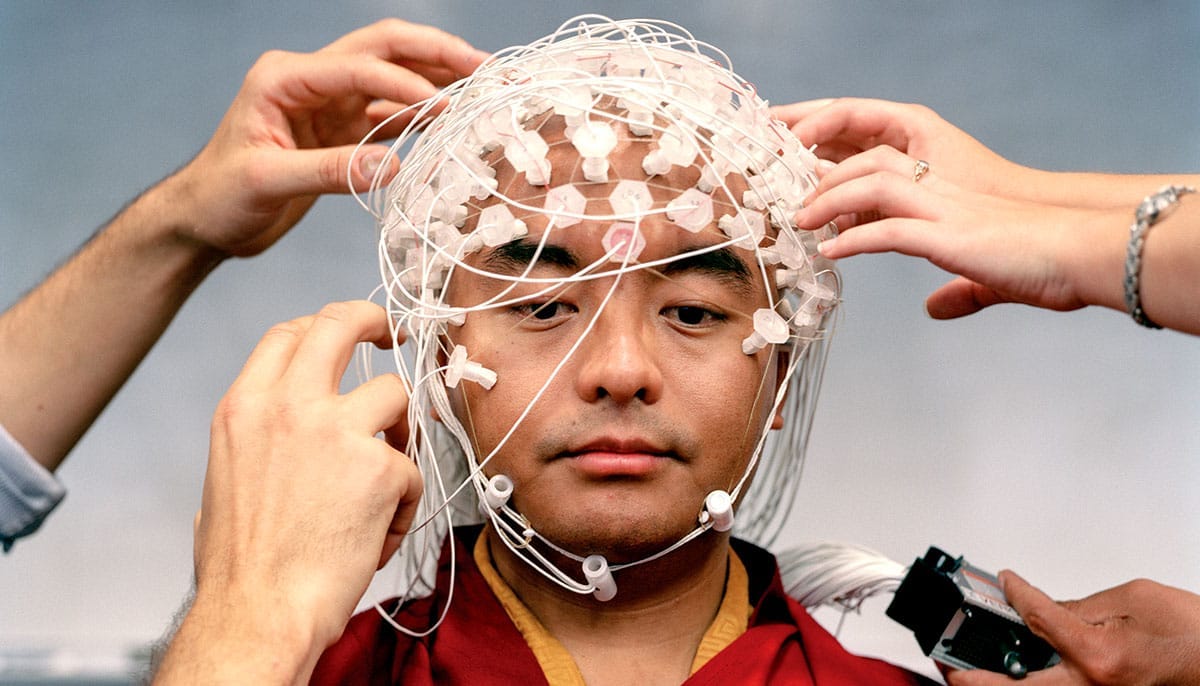
Photo credit: Brian Ulrich
The gamma wave data was striking, but it was not the only finding. fMRI scans showed that the neural circuits associated with empathy and positive emotion became 700 to 800 percent more active during compassion meditation. In participants who were new to meditation, the increase was closer to 10 to 15 percent.
In a later longitudinal study, Davidson’s team examined scans of Rinpoche’s brain taken when he was 41 years old. Using markers associated with brain aging, they estimated it to be roughly eight years younger than his chronological age. When Davidson shared the result, Rinpoche was characteristically unmoved. His interest in meditation, he said, was never about defying aging. It was about cultivating insight and happiness.
Rinpoche has described his collaboration with scientists as a bit like learning two languages at once: Buddhism on the one hand, modern neuroscience on the other. In his view, both are ways of investigating the mind.
He was trained from a young age in the Tibetan Buddhist tradition and later became one of the first long-term meditation practitioners to participate extensively in neuroscience research. Over the past two decades he has collaborated with scientists studying attention, emotion, compassion, and neuroplasticity.
Rinpoche has logged more than 60,000 hours of meditation practice, more time than most surgeons spend in the operating room over an entire career. He also completed the classic three-year meditation retreat that marks an advanced stage of Tibetan contemplative training.
At one point he stepped away from everything. No monastery, no students, no role as a teacher. He left with almost nothing and spent more than four years traveling and practicing anonymously as a wandering yogi across India and Nepal.
He eventually returned, and today he leads the global Tergar meditation community and continues teaching around the world.
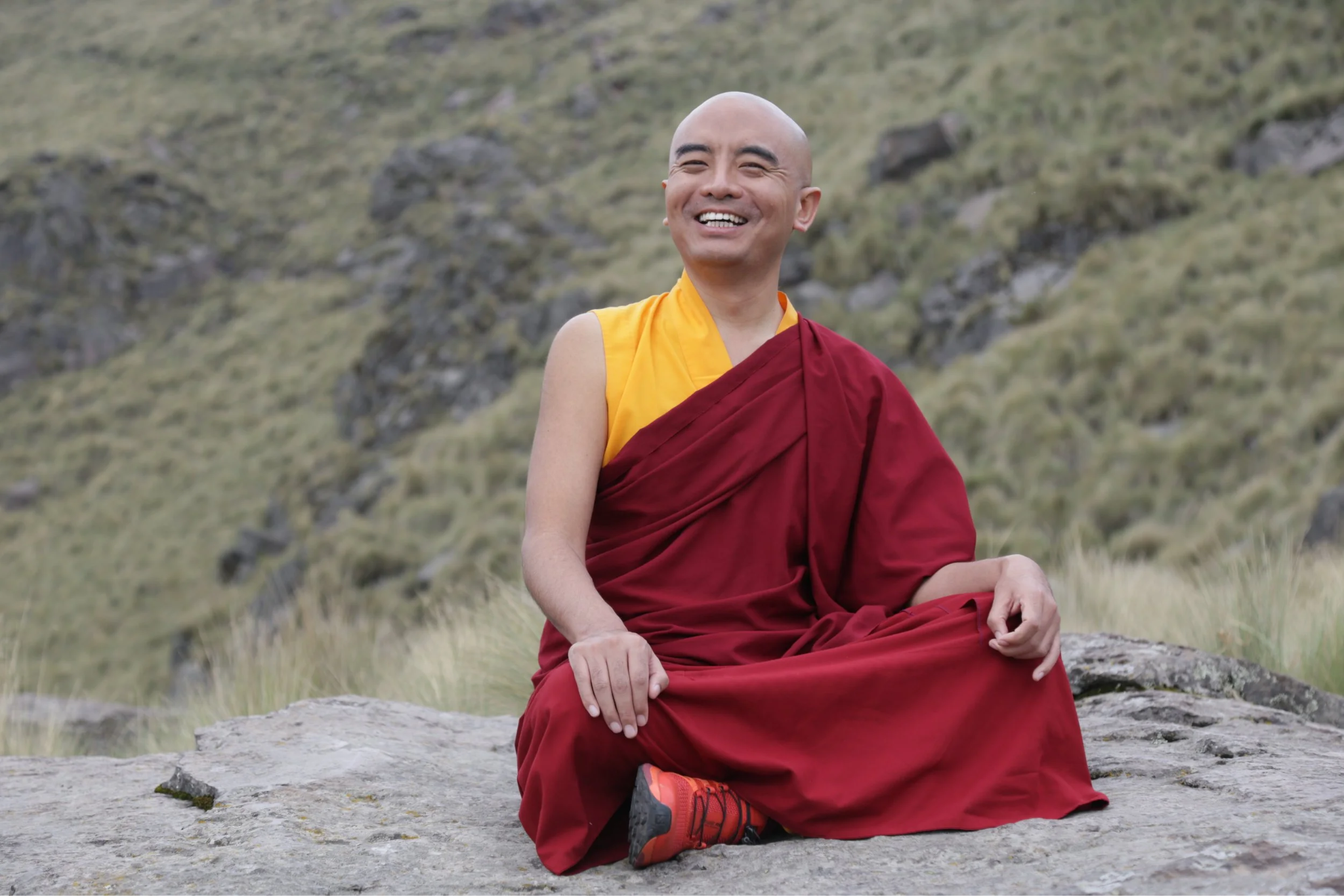
This Week’s Podcast: Staying Grounded in a Busy Life
In this week’s episode of Dharma Lab, we are honored to have Rinpoche join us for a conversation about meditation, science, and a question many people wrestle with: how to stay grounded in the middle of a busy life.
Rinpoche leads several organizations and travels widely, yet he often appears remarkably calm and unhurried. When Cort asked how he manages that pace, Rinpoche pointed to something simple. When life becomes busy, the mind often leaves the present moment. It starts replaying the past or anticipating the future. The body follows along, tightening and bracing.
His suggestion is not necessarily to slow life down, but to learn how to return attention to the present moment even while things are happening.
As he put it during the conversation:
“Time is like a rubber band. There is a lot of flexibility. But while you are doing all of it, be present.”
When awareness is present, he says, something interesting happens.
“You are working, and at the same time you are resting.”
The conversation moves between practical advice and emerging science. They discuss the difference between awareness and the thoughts and emotions that pass through it, the role of compassion and altruistic motivation as a source of energy, and the importance of wisdom in learning when to let go.
Richie also shares some of the research his lab and collaborators are beginning to see around well-being and how qualities like awareness, compassion, and purpose may influence not only our own experience but also the people around us.
The episode closes with a short 1-minute practice led by Rinpoche that listeners can try in everyday life.
We hope you join us for the full conversation, linked here.
— Dharma Lab
Our new book is coming out in a few weeks! Pre-order Born to Flourish and get and get:
1 full year of paid access to Dharma Lab ($100 value) with weekly essays, research updates, podcasts, and member-only online events
Live access to an exclusive Born to Flourish Launch Event
Richie and Cort’s personal reading list on the art of flourishing
A daily protocol for training the mind to flourish

I love that idea!
I love the idea that the benefits of meditation are and were true long before science documented them. Science is just another language to share truths that exist independently. Thanks for this.